You'll know the minute you arrive this is the place. We are here to surpass your desires.
Opera House | Kandivali
-
Call for help: +91 9820545504
-

Opera House | Kandivali
Call for help: +91 9820545504

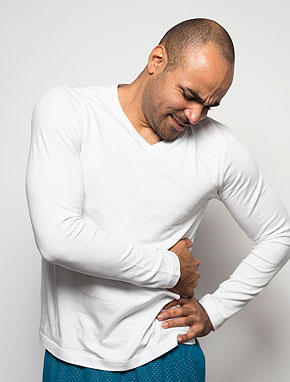
At 206 Reasons Orthocare, we understand that persistent pain in your joints, tendons, and ligaments can severely limit your quality of life. Dr. Ruchit Shah specializes in diagnosing and effectively treating common orthopedic conditions, utilizing both conservative and advanced minimally invasive techniques to restore your comfort and function.
Overview: Heel pain, most commonly caused by Plantar Fasciitis, is an inflammation of the thick band of tissue (plantar fascia) that runs across the bottom of your foot and connects your heel bone to your toes. Pain is typically sharpest with the first steps in the morning or after periods of rest.
Causes: Overpronation (flat feet), high arches, prolonged standing, ill-fitting footwear, obesity, and tight calf muscles.
Treatment at 206 Reasons Orthocare:
Conservative: Rest, ice, stretching exercises (especially for the calf and plantar fascia), night splints, custom orthotics, and anti-inflammatory medication.
Advanced: PRP (Platelet-Rich Plasma) injections to promote healing, specialized physiotherapy, and in rare, persistent cases, minimally invasive procedures to release the plantar fascia.
Overview: Frozen Shoulder is a debilitating condition where the capsule surrounding the shoulder joint becomes thick, stiff, and inflamed, severely restricting movement and causing chronic pain. It progresses through three stages: Freezing (pain increases), Frozen (pain lessens but stiffness dominates), and Thawing (slow return of motion).
Causes: Often occurs spontaneously, but is more common after an injury or surgery that forces immobilization, or in patients with diabetes or thyroid issues.
Treatment at 206 Reasons Orthocare:
Conservative (Early Stages): Focused on pain control (medication, injection) and aggressive, specialized physiotherapy to regain range of motion. This is the cornerstone of treatment.
Advanced (Persistent Stiffness): If movement does not return, Dr. Shah may recommend:
Manipulation Under Anesthesia (MUA): The shoulder is moved while the patient is sedated to break up adhesions.
Arthroscopic Capsular Release: A minimally invasive, keyhole procedure to surgically cut the thickened, tight capsule to instantly restore mobility.
Overview: Trigger finger occurs when one of the finger’s tendons becomes inflamed and unable to glide smoothly through the sheath that surrounds it (the pulley system). This creates a painful nodule that catches or “locks” the finger in a bent position, requiring the patient to often forcefully straighten it.
Causes: Repetitive gripping activities, prolonged heavy use of the fingers, and more common in women and patients with diabetes or rheumatoid arthritis.
Treatment at 206 Reasons Orthocare:
Conservative: Rest, modifying gripping activities, splinting the finger at night, and anti-inflammatory medication.
Definitive Non-Surgical: A single Corticosteroid Injection into the tendon sheath is highly effective, relieving symptoms in 70-80% of patients.
Surgical: For cases resistant to injection, a simple A1 Pulley Release is performed, often as an outpatient procedure. This involves making a small incision (or sometimes a needle release) to cut the constricting sheath, allowing the tendon to glide freely again.
Overview: Tennis Elbow is the inflammation or micro-tearing of the tendons that join the forearm muscles on the outside of the elbow (lateral epicondyle). Despite the name, most cases are related to repetitive motions like gripping tools, gardening, carpentry, or keyboard use, not just racket sports. It causes pain and tenderness over the outside of the elbow and weakness in grip strength.
Causes: Repetitive strain and overuse leading to cumulative damage in the tendon’s origin point on the bone.
Treatment at 206 Reasons Orthocare:
Conservative (Initial): Rest, bracing (counterforce strap), ice, eccentric strengthening exercises guided by a physiotherapist, and anti-inflammatory medication.
Advanced Regenerative Therapy: PRP (Platelet-Rich Plasma) injections are often preferred over cortisone, as they can help heal the tendon micro-tears rather than just masking the inflammation.
Surgical: In the rare event that pain persists after 6–12 months of non-surgical treatment, Arthroscopic or Open Debridement (removing the damaged tendon tissue) is performed to stimulate a healing response.
Expound the actual teachings of the great explorer of the truth, the master-builder of human happiness. No one rejects, dislikes, or avoids.
No one rejects, dislikes, or avoids. Expound the actual teachings of the great explorer of the truth, the master-builder of human happiness.
The master-builder of human happiness No one rejects, dislikes, or avoids. Expound the actual teachings of the great explorer of the truth.
Teachings of the great explorer of the truth The master-builder of human happiness No one rejects, dislikes, or avoids. Expound the actual.
You'll know the minute you arrive this is the place. We are here to surpass your desires.